 Reviews



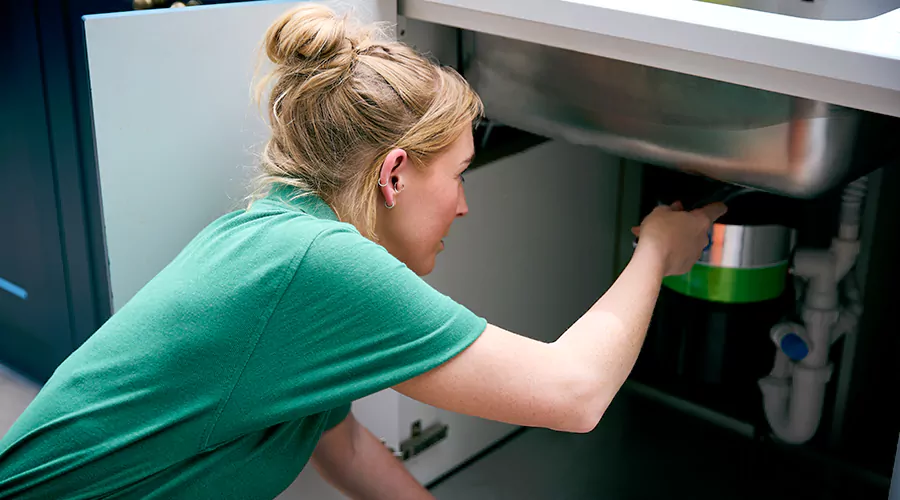
A garbage disposal can often be repaired by clearing a mechanical jam or resetting its overload protector. However, the correct solution depends on whether the appliance is jammed, has lost electrical power or has a drainage problem. Professional garbage disposal repair averages approximately $230 in the United States according to July 2026 pricing data.
A disposal that hums without turning usually needs different troubleshooting from one that remains completely silent. Likewise, a disposal that runs normally while the sink remains full may have a blocked drain rather than a damaged motor. This guide explains how to identify the problem and perform appropriate checks before considering appliance replacement.
What Are the Most Common Garbage Disposal Problems?
Garbage disposal problems generally involve the grinding mechanism or electrical system. Drainage problems and leaking connections can produce additional symptoms. Understanding which system has failed helps you avoid replacing parts that are functioning normally.
Common problems include:
- Mechanical jams: A foreign object prevents the grinding mechanism from rotating.
- Electrical interruptions: A tripped breaker or disconnected power supply prevents operation.
- Overload protection: The motor stops after overheating or encountering excessive resistance.
- Drainage blockages: Food or grease prevents wastewater from leaving the sink.
- Damaged seals: Water escapes around the mounting assembly or discharge connection.
- Motor problems: Internal electrical or mechanical damage prevents normal operation.
A disposal does not use sharp rotating blades like a household blender. Instead, most designs use rotating impellers that move food against a stationary grinding ring. This difference matters because an obstruction can prevent the rotating plate from moving even when the grinding components are not damaged.
How Can You Identify the Problem?
The sound and behavior of the appliance provide useful diagnostic information. A humming motor often indicates that electrical power is reaching the unit but the mechanism cannot rotate. Complete silence may indicate a power interruption or activated overload protection.
Use the following comparison to narrow the problem.
| Symptom | Possible Cause | Initial Check |
|---|---|---|
| Humming without grinding | Mechanical jam | Disconnect power and inspect |
| No sound when switched on | Power interruption or overload | Check electrical supply |
| Runs but water remains | Drainage blockage | Inspect connected drain |
| Repeatedly stops | Jam or overheating | Check the grinding mechanism |
| Leaks from the side | Discharge gasket or connection | Trace the first wet point |
| Leaks from the bottom | External leak or internal failure | Inspect the entire housing |
| Unusual grinding sounds | Foreign object or component damage | Stop operation immediately |
A useful first step is determining whether the issue appeared suddenly or developed gradually.
A disposal that stopped immediately after a hard object entered the chamber may be jammed. An appliance that has become progressively louder may have a different mechanical problem.
What Warning Signs Indicate a Disposal Needs Repair?
A garbage disposal often develops symptoms before it stops functioning completely. Recognizing these changes can prevent repeated attempts to operate a damaged or jammed appliance.
Watch for these warning signs:
- The motor hums without rotating.
- The disposal does not respond when switched on.
- The reset button repeatedly trips.
- The motor stops shortly after starting.
- Grinding sounds become unusually loud.
- The appliance vibrates more than normal.
- Standing water remains despite normal motor operation.
- Water begins leaking beneath the unit.
- A burning smell develops during operation.
- The appliance repeatedly jams during ordinary use.
A burning smell or repeated electrical failure is particularly concerning. Stop operating the appliance when these symptoms appear. Do not continue testing a motor that is clearly struggling to rotate.
What Should You Do Before Attempting a Repair?
Electrical safety should come before mechanical troubleshooting. A wall switch in the off position does not provide sufficient protection when someone is inspecting internal disposal components or working near connected wiring.
Before beginning:
- Disconnect the appliance from its electrical supply.
- Turn off the appropriate circuit breaker when the unit is hardwired.
- Remove standing water if the sink is full.
- Clear stored items from beneath the sink.
- Prepare a flashlight and suitable retrieval tools.
- Locate the manufacturer's troubleshooting instructions.
Never place your hand inside the grinding chamber. InSinkErator specifically warns against placing hands inside a garbage disposal. Its troubleshooting instructions recommend using tongs or pliers to remove visible foreign objects. Do not attempt electrical repairs unless you have the appropriate qualifications.
How Do You Fix a Jammed Garbage Disposal?
A mechanical jam prevents the grinding plate from turning normally. Many garbage disposals include a manual turning mechanism that allows an obstruction to be released without operating the motor.
The exact procedure depends on the manufacturer's design.
For compatible InSinkErator models:
- Disconnect electrical power: Verify that the appliance cannot start.
- Locate the manual turning socket: Many models have a hexagonal opening beneath the unit.
- Insert the specified wrench: Use the manufacturer-supplied tool or an approved equivalent.
- Move the mechanism gradually: Rotate the wrench back and forth.
- Continue until movement improves: Follow the manufacturer's instructions for freeing the mechanism.
- Inspect the grinding chamber: Use a flashlight to look for foreign material.
- Remove visible objects: Use appropriate tongs rather than your hands.
- Remove the wrench: Check that no tools remain inside or beneath the unit.
Some models use a different method and do not have the same turning socket. InSinkErator provides different unjamming procedures for different product families. Always match the procedure to the installed appliance.
How Do You Reset a Garbage Disposal?
The overload protector can interrupt electrical power when the motor overheats or encounters excessive resistance. Resetting the appliance should occur only after checking for a mechanical jam.
A reset cannot remove an obstruction inside the grinding chamber.
For models equipped with a manual reset button:
- Disconnect electrical power.
- Confirm that the grinding mechanism is no longer jammed.
- Allow the motor to cool according to its instructions.
- Locate the reset button.
- Press the button as directed by the manufacturer.
- Remove all tools from the work area.
- Restore electrical power.
- Perform a brief operational test.
Some InSinkErator models require a cooling period before the overload protector can be reset. The manufacturer also recommends checking the electrical supply if the motor remains inoperative. Repeatedly resetting an appliance that immediately shuts down is not a lasting repair.
Why Does the Disposal Run but Water Remain in the Sink?
A disposal that rotates normally while wastewater remains in the sink may have a blockage inside its discharge pipe or connected kitchen drain. Mechanical operation and drainage are separate functions. Common blockage locations include the discharge elbow and P-trap. Food or grease can also accumulate farther into the kitchen branch pipe.
A controlled inspection should begin with the connected drainage system.
- Confirm that the grinding mechanism operates normally.
- Check whether a second sink bowl is also affected.
- Inspect accessible discharge connections.
- Avoid repeatedly operating the disposal against standing water.
- Use appropriate drain-clearing methods when a blockage is confirmed.
The related search term clogged garbage disposal can describe both a mechanical jam and a downstream drainage restriction. Identifying the distinction prevents unnecessary motor repairs.
How Do You Identify a Garbage Disposal Leak?
Water beneath a disposal does not automatically mean the entire appliance has failed. External connections can leak and allow water to travel down the housing before dripping from the bottom.
Begin by disconnecting electrical power and drying the accessible surfaces.
Then inspect the following locations:
- Upper mounting assembly: Check the connection between the sink and disposal.
- Discharge outlet: Look for moisture around the gasket and discharge pipe.
- Dishwasher inlet: Inspect the connected hose when one is installed.
- Adjacent plumbing: Examine the P-trap and other nearby joints.
- Appliance housing: Look for water emerging directly from the disposal body.
A leak originating from an external connection may require a replacement gasket or correctly installed fitting. An internal housing leak requires a different evaluation.
How Much Does Garbage Disposal Repair Cost in 2026?
Repair costs depend on the failed component and whether the appliance requires professional labor. Minor external parts cost substantially less than replacing the entire appliance.
The following figures reflect reported U.S. prices.
| Repair or Replacement | 2026 Cost |
|---|---|
| Replacement gasket or seal | 3–20 |
| Replacement discharge pipe part | 10–25 |
| Continuous-feed disposal repair | 80–270 |
| Batch-feed disposal repair | 70–310 |
| Average professional disposal repair | $230 |
| Average complete disposal replacement | $550 |
The repair figures come from Angi's July 2026 pricing guide. Its August 2026 replacement guide reports an average replacement cost of approximately $550. Parts prices exclude installation labor.
A simple jam does not justify replacing the appliance when its other components remain functional.
When Should You Call a Professional?
Professional repair becomes appropriate when safe troubleshooting does not restore operation or when the problem involves internal electrical components. A unit that repeatedly overheats may have a fault beyond an accessible mechanical jam.
Seek professional assistance when:
- The motor remains unresponsive after appropriate troubleshooting.
- The appliance repeatedly trips its overload protection.
- Electrical wiring or connections appear damaged.
- A burning smell develops during operation.
- The grinding mechanism cannot be freed safely.
- The appliance housing has a confirmed internal leak.
- An external repair does not correct recurring problems.
An older appliance with several independent failures may also justify evaluating replacement costs.
How Can You Prevent Future Disposal Problems?
Proper use reduces the likelihood of mechanical jams and drainage restrictions. The manufacturer's instructions should determine which materials are suitable for the appliance.
Recommended maintenance habits include:
- Keep hard objects out of the grinding chamber.
- Feed suitable food waste gradually.
- Avoid pouring cooking grease into the disposal.
- Use cold water during grinding when directed by the manufacturer.
- Continue running water briefly after grinding finishes.
- Stop operation when unusual noises develop.
- Inspect visible connections periodically for leaks.
InSinkErator recommends a moderate flow of cold water during grinding and advises against pouring grease into the appliance.
Conclusion
To fix a garbage disposal, identify the failure before attempting repairs. A humming appliance may have a mechanical jam, while a completely silent unit may have lost power. Normal grinding with standing water suggests a drainage problem. Always disconnect electrical power before inspection and follow the manufacturer's troubleshooting instructions. If internal electrical components are damaged or the unit repeatedly fails, professional repair may be appropriate.
Frequently Asked Questions
Why does my garbage disposal hum without working?
The grinding mechanism may be jammed. Disconnect power before inspecting it.
Can I repair a garbage disposal that will not turn on?
Sometimes. A power interruption or activated overload protector may be responsible.
Why does my disposal keep shutting off?
The motor may be overheating or encountering repeated resistance. Check for a jam before resetting it.
Does a leaking disposal need to be replaced?
Not always. Some external connections and gaskets are repairable.
How long does a garbage disposal normally last?
Many units last approximately 7–12 years. Actual lifespan depends on usage and maintenance.